How much does asphalt paving cost in Toronto?
Published 2025–2026 guides for Toronto and the GTA put standard asphalt driveway installation at roughly $4 to $10 per square foot, with a typical two-car driveway landing between $2,500 and $6,500. Resurfacing over a sound base runs about $1 to $3 per square foot in the same sources. These are indicative market ranges, not a quotation — your price is the written fixed-price quote prepared after an on-site assessment.
Do I need a permit to repave my driveway in Toronto?
Like-for-like repaving entirely on your own property generally proceeds without a building permit. But the moment work touches the City boulevard — the apron, the curb, anything between your lot line and the road — Municipal Code Chapter 743 requires a street-work permit from Right-of-Way Management, applied for at least eight weeks before work begins. We identify which side of that line your project sits on and handle the application when one is needed.
Can I widen my driveway or add a front yard parking pad?
Sometimes. Zoning By-law 569-2013 caps driveway width and requires front-yard soft landscaping, and boulevard work needs City permission. Front yard parking pads under Chapter 918 are tightly restricted: much of the former City of Toronto accepts no new applications, approved pads must be 2.2 to 2.6 metres wide with a permeable surface, and the annual City licence — published at $303.32 plus HST for 2024 renewals — does not transfer when a home sells. We confirm what is approvable at your address before quoting anything.
What asphalt mix and base do you use?
HL 3 surface-course hot mix — the established Ontario standard for residential driveways — placed in line with OPSS.MUNI 310, over Granular A crushed aggregate meeting OPSS 1010 and compacted in controlled lifts. Heavier-duty surfaces such as parking lots may call for a binder course or an SP 12.5 Superpave mix. The exact structure for your project is specified in the written quote, not improvised on the day.
How long does an asphalt driveway last in Toronto?
Published Ontario guides put asphalt driveway lifespans at 15 to 30 years, and the spread is mostly explained below the surface: base depth, compaction, and drainage. In Toronto’s freeze-thaw climate, annual crack attention and periodic sealcoating are what carry a driveway to the far end of that range; resurfacing typically enters the conversation after 10 to 15 years of service.
When can I drive on new asphalt?
Stay off it entirely for the first 24 hours, and keep vehicles off for 48 to 72 hours in warm weather — longer during heat waves, when fresh mix stays soft. Asphalt continues curing for months after placement, so through the first season avoid dry-steering in place, motorcycle kickstands, trailer tongues, and point loads without a board underneath. Your care sheet covers all of it.
Should I resurface or fully replace my driveway?
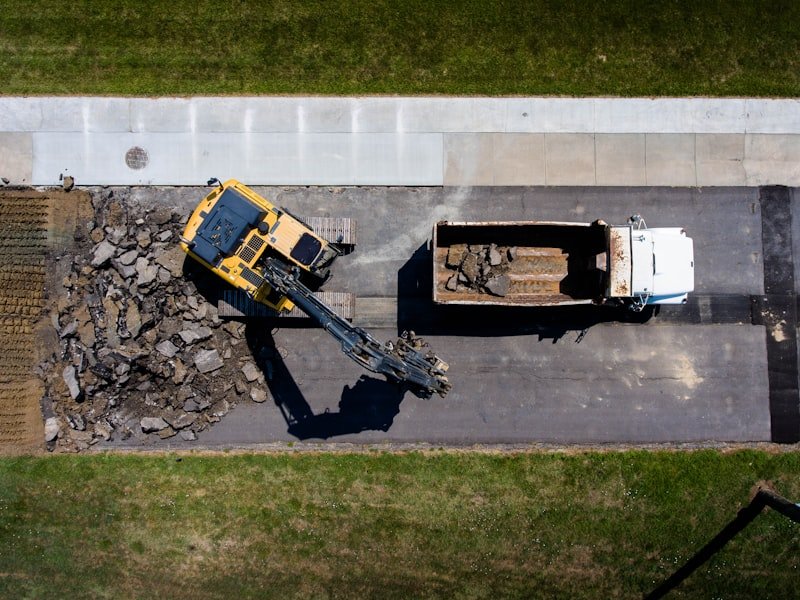
Resurface when the base is structurally sound: cracking is limited and surface-level, drainage still works, and grades hold. Replace when alligator cracking covers panels, the surface heaves or ruts, or water sits — an overlay over a failed base simply prints the old cracks through the new surface within a couple of winters. The assessment answers this honestly, and we quote whichever your driveway actually needs.
What time of year can you pave in Toronto?
The Toronto paving season generally runs from late April through November, because hot mix needs sustained above-freezing temperatures to compact to density before it cools — and suppliers’ plants close for winter. Spring bookings get first choice of schedule; crack sealing and repairs extend into the shoulder seasons. We would rather decline a cold-weather placement than deliver a surface that fails its first winter.
Why did my driveway crack after only a few years?
Almost always the base, not the blacktop: granular that was too thin, never compacted in lifts, or placed over wet clay; missing edge support; or a flat grade that let water sit and freeze. Toronto’s 40 to 65 annual freeze-thaw cycles find every one of those shortcuts quickly. The fix that lasts treats the cause — which is why our quotes itemize base depth and compaction instead of hiding them.
How do you handle drainage on clay soil?
We grade a minimum two per cent fall away from buildings and check it with instruments, deepen the Granular A structure over soft clay, and add geotextile separation where the subgrade pumps under load. Where the site’s geometry cannot achieve surface fall — common on flat clay lots — we quote a swale or drainage structure rather than pretending slope into a plan that cannot hold it.
Should I sealcoat my driveway, and how often?
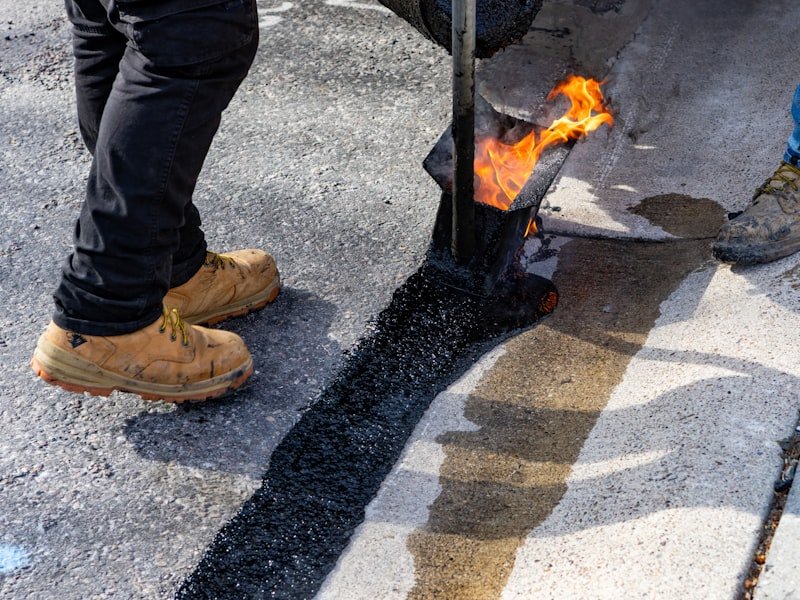
Yes, as protection rather than decoration: sealcoating slows oxidation, surface raveling, and fluid staining. The first application typically follows about a year after new paving so the surface fully cures, then every two to four years depending on exposure and wear. Published Ontario guides price sealing work at roughly $0.15 to $1.00 per square foot, and pairing it with hot-applied crack sealing is the highest-value maintenance combination in this climate.
Do you pave shared mutual driveways?
Yes — they are a signature of Toronto’s older neighbourhoods, and we have a settled process: both owners agree to scope and cost split in writing before work starts, hand placement handles runs too narrow for machines, and any change to the driveway’s footprint is checked against City requirements first. Done properly, the shared joint is the strongest line on the surface instead of the first one to open.
How long does the work take on site?
Most residential replacements run one to two working days once permits and utility locates have cleared — excavation and base one day, paving the next, with weather holding the final say. Straightforward resurfacing is often a single day; parking lots are phased so part of the lot stays open throughout. Your written quote includes the schedule, and the schedule includes the City’s lead times, not just ours.